- Order agent
- Reservations agent
WhatsApp commerce for Food & Beverage
Orders In, Meals Out — Effortlessly
WhatsApp commerce for a food business in India means taking orders directly in the chat: a digital menu with photos, real-time order notifications to the kitchen, delivery-zone management with tracking, and reorder nudges for regulars — with no marketplace commission in between.
- Official WhatsApp Business API
- 0% message markup
- UPI + GST built in
- Set up in minutes
- Guided onboarding, every plan
- 14-day money-back guarantee
Prefer a walkthrough? Book a demo, or see it on WhatsApp first.
- Menu shared
- Order in chat
- UPI payment
- Kitchen ticket
- Reorder nudge
Order agentDone
Ordered, paid, cooked, and back next weekPaymentsPaid
₹1,140 · Order #218
Outcomes
What WatEase does for Food & Beverage.
Accept orders, update menus and manage deliveries through WhatsApp.
On WhatsApp
How a repeat customer orders without the aggregator
A regular reorders from a WhatsApp menu, pays by UPI at zero MDR, and the ticket lands in the same kitchen queue as a dine-in order — so the outlet keeps the 24-30% an aggregator would have taken, and keeps the customer’s phone number.
Menu shared
A QR on the table, the bill and the shopfront opens today’s menu — items 86’d in the kitchen grey out across every open chat within seconds.
Runs on: OneMenu + live stock sync
Order in chat
The customer builds a cart in the thread with modifiers and portion sizes, no app install and no third-party account.
Runs on: In-chat cart + modifiers
UPI payment
Paid in the conversation at 0% MDR, or COD confirmed explicitly before the kitchen fires the ticket.
Runs on: UPI checkout (Razorpay / PhonePe / Paytm)
Kitchen ticket
The KOT routes to Petpooja or Dotpe so the chef sees it in the same queue as the floor, not on a second tablet.
Runs on: POS integrations
Reorder nudge
The number is yours, so the Friday-night regular gets a utility nudge on Friday — an aggregator never hands you that list.
Runs on: Segments + scheduled campaigns
Used on every channel
Wherever your customers start, the same agent answers.
One customer record, and a person can take over any conversation in one tap.
WhatsApp
Tonight’s order, paid in the chat
A regular asks what’s good tonight, adds butter chicken and four naan, pays by UPI and gets the kitchen’s ready time in the thread.
Instagram DM
Story reactions turn into orders
“Can I get this delivered?” on a biryani story is answered in the DM; the order is completed on WhatsApp with the same cart.
Website chat
Menu questions and typed orders
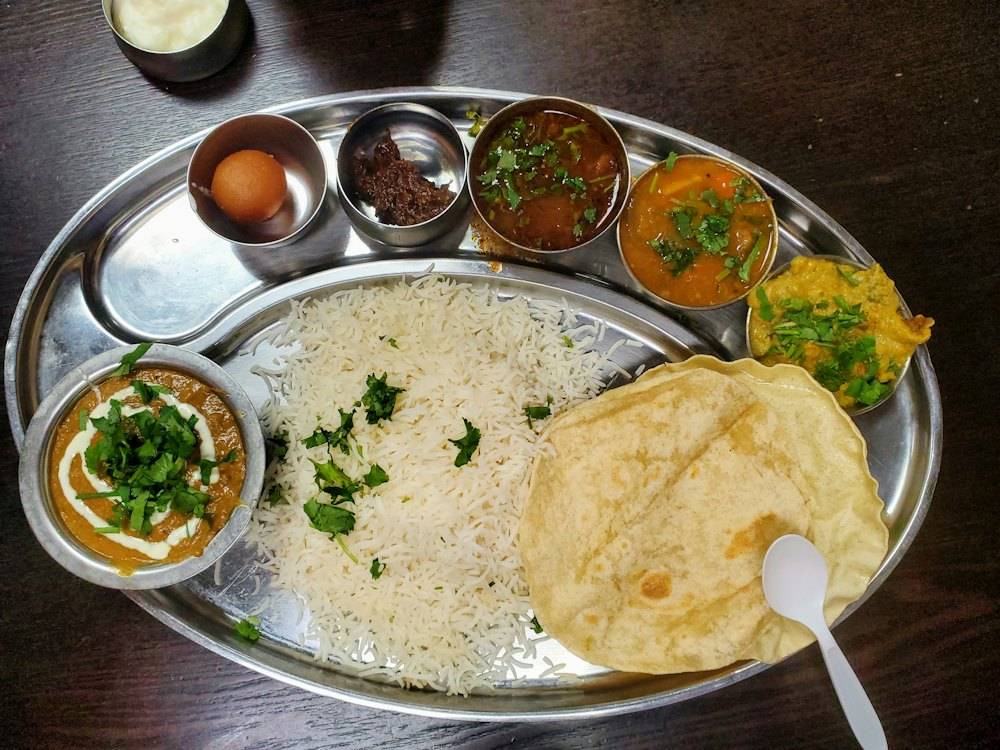
A visitor asks if the thali is Jain-friendly, orders two by typing and gets a payment link — all inside the conversation.
Messenger
Table bookings from the Facebook page
A Friday table for six is booked from Messenger; the confirmation code arrives in the same text thread.
The agents that run it
3 agents, your rules.
Each one works from your own catalogue, calendar and knowledge base, and stops exactly where you told it to.
Order agent
Takes delivery and pickup orders from the live menu, with portions and add-ons, and sends the payment link.
What it does
- Finds dishes on the live menu and quotes today’s prices
- Builds the cart with portions and add-ons and places the order
- Tells the customer where their order is
- Resends a payment link that was lost or expired
Hands to a person when a customer reports a wrong or late order — a ticket goes to the outlet manager.
Reservations agent
Books tables against real availability, answers allergen and timing questions, and records what guests say.
What it does
- Offers only the free tables for the date and party size
- Books the table and gives a confirmation code
- Answers menu and allergen questions from your knowledge base
- Records feedback after the meal
Hands to a person when a large group or a private event is asked for — the enquiry goes to a person.
Regulars agent
Brings a regular back with the order they had last time and an offer you have actually published.
What it does
- Repeats the last order at today’s prices
- Applies a published offer, never an invented one
- Sends only the templates you approved, to customers who opted in
Hands to a person when a customer asks to stop messages, or wants a discount you have not set.
Every action is logged, and changes to your data can be undone; ad spend and campaign sends wait for your approval, and you choose which other actions do too.See how agents work
Getting started
Get Started in 3 Simple Steps
Set up in minutes; your first agent is live in week one, with guided onboarding included.
Connect your WhatsApp
Link your WhatsApp Business account in minutes, with no code.
Set up your catalog
Add your products, services or listings, by CSV or by hand.
Start selling and growing
Share your store link, switch on the agents and watch orders arrive.
What runs it
The modules behind food & beverage on WatEase.
Every module reads and writes the same customer record, so the agents always know who they are talking to.
Compliance rules, the common mistakes and a worked ROI model: Read WhatsApp for restaurants in India.
Does WhatsApp pay for itself in food & beverage?
A single-outlet QSR doing 1,200 delivery orders a month, currently almost all through Swiggy and Zomato. Every input is visible and adjustable, so change the ones you disagree with and the arithmetic still holds.
The assumptions
- Delivery orders per month1,200
- Your own figure — substitute it.
- Average order value₹420
- Your own figure — substitute it.
- Orders placed through an aggregator90%
- Your aggregator-sourced share of delivery. Take it from last month’s settlement statements.
- Share of that loss recovered in chat12%
- Share of aggregator orders that shift to your own WhatsApp channel once regulars have a direct route. Conservative; repeat-heavy menus do better.
- Aggregator commission avoided on a direct order25%
- Base commission plus payment and packing fees, commonly 24-30% all-in for Indian outlets. Use your own settlement rate.
- Cost per utility message (Meta, India)₹0.115
- Meta's published India rate, verified 2026-09-28. GST of 18% applies on top.
The arithmetic, per month
| Line | How it is calculated | Amount |
|---|---|---|
| Revenue recovered | 1,200 × 90% × 12% × ₹420 | ₹54,432 |
| Aggregator commission avoided on a direct order | 130 × ₹420 × 25% | ₹13,608 |
| WhatsApp message cost | 1,200 × 3 messages × ₹0.115 | −₹414 |
| WatEase plan | Flat monthly fee, quoted on request — subtract your quote (request pricing). 0% markup on the messages above. | On request |
| Monthly impact before the plan fee | Under these assumptions, at this volume | ₹67,626 |
This is an illustrative model built from the assumptions above, not a measured outcome from a named customer, and nothing here is a guarantee of results. Message costs are Meta’s published India rates (verified 2026-09-28) and exclude 18% GST; WatEase adds 0% markup to them. Run your own volumes through the conversation cost calculator and the ROI calculator.
How Food & Beverage businesses actually run on WhatsApp
An Indian QSR or cloud kitchen pays Zomato and Swiggy 24-30% in commission on a Rs 350 order, which is more than the operator's gross margin on the food itself. WhatsApp ordering is the only channel where the unit economics still work for a single-outlet thali joint or a Bangalore cloud kitchen. The competitive question is not whether to run direct ordering, it is whether the staff can hold an SLA on a Friday-night surge without a screen built for kitchen ops.
Real WhatsApp use cases for food & beverage
- • FSSAI-licence-aware menu publishing where items requiring a separate licence (alcohol, dairy products) are gated by outlet automatically.
- • Live KOT routing to Petpooja or Dotpe so the chef sees the WhatsApp order in the same ticket queue as the dine-in tables.
- • Pre-order capture for Gurugram and Bengaluru office lunch crowds with a 11:30 AM cutoff and a single delivery wave at 12:45.
- • Festive thali sets with quantity caps per outlet so a viral broadcast does not oversell the kitchen by 200 trays.
- • Driver assignment via Shadowfax or Dunzo on-demand pickup, with the delivery boy's live OTP pushed into the customer thread.
India-specific operating context
FSSAI registration or licence number must be visible on every menu and invoice; the FSS Act treats WhatsApp menus as published menus the moment a customer can order from them. Swiggy and Zomato currently take 18-25% base plus 3-7% payment gateway plus packing and delivery fees, while a direct UPI collection on WhatsApp costs zero MDR and Rs 0.115 in message cost. GST is 5% without ITC for restaurants under the composition scheme and 18% for cloud kitchens under regular GSTR; the order PDF must be category-correct or the buyer's expense claim breaks. Hindi-Roman menu names ('Paneer Tikka' not 'Cottage Cheese Tikka') consistently outperform anglicised names on Indian threads.
Where food & beverage merchants typically slip
Operators run the menu off a Google Sheet and forget to mark items 86'd during a busy lunch service, leading to refund disputes that wreck Meta-rated quality scores. Others accept orders past the kitchen's cutoff and burn delivery SLAs. WatEase ties live stock to KOT acceptance, so an unavailable item flips to greyed-out across all open chats within 30 seconds, and rejects new orders past per-outlet capacity automatically.
What food & beverage businesses actually use WhatsApp for
Each is a specific job, with the message, the setup steps and the honest arithmetic worked out for food & beverage in India.
- WhatsApp menu & direct orderingA live menu inside the chat, the order taken in conversation, UPI at 0% MDR — and no aggregator commission on it.
- Kitchen & delivery updatesKitchen ETA, rider name and delivery OTP go out automatically, so nobody calls the outlet mid-service.
- Feedback & review captureA one-tap rating after delivery, a Google review invite for every diner, and unhappy diners routed to a manager.
- Repeat orders & win-backWin back lapsed regulars at their usual eating hour, offering the dish they actually order — commission-free.
Before and after
What changes.
The same moments in a food & beverage day, without agents and with WatEase — mechanisms, not promises.
| Moment | Without agents | With WatEase |
|---|---|---|
| Dinner orders peak at 8 PM | The phone rings out; orders are mis-heard. | Menu, cart, payment and kitchen ticket run in the chat, without a call. |
| Today’s special is ready | A story that half the regulars miss. | A broadcast to opted-in regulars with a one-tap order button. |
| A delivery address is outside the zone | Discovered after the food is cooked. | Pincode rules and minimum order checked before checkout. |
Frequently Asked Questions
Can a restaurant or cloud kitchen sell on WhatsApp?
Yes. You publish a digital menu with photos and descriptions, customers order in the chat and pay via UPI or cash on delivery, and the order reaches your kitchen instantly. Because it is a direct channel, there is no aggregator commission on the order.
How do food businesses use the WhatsApp Business API?
Typical flows are real-time menu updates, automated order-status and delivery notifications, repeat-order suggestions for loyal customers, and daily-special broadcasts to opted-in regulars. Peak-hour analytics help plan kitchen capacity.
What does WhatsApp commerce cost for a food business?
WatEase pricing is on request — every business gets a plan and price customised to its use case and requirements, quoted by the WatEase team, billed monthly or annually with guided onboarding at no setup fee, 0% markup on WhatsApp messages and an all-in-one app store — inbox and campaigns included, with CRM, automation, commerce and AI agents as add-on modules. On top of that, Meta bills WhatsApp Business API messages in India at roughly ₹0.8631 for marketing messages and ₹0.115 for utility messages like order confirmations and delivery updates; replies inside the 24-hour service window are charged at the utility rate from 1 October 2026, after the first 1,000 a month per business number. Meta revises these rates periodically, so check our conversation cost calculator for current numbers.
Can I manage delivery zones?
Yes. Set up delivery zones with distance-based or pincode-based rules, minimum order values, and delivery charges per zone.
Do you support real-time order notifications?
Orders trigger instant WhatsApp notifications to you and your kitchen team. Customers get automated status updates.
Can I run daily specials?
Absolutely. Update your menu in real-time and broadcast daily specials to your regular customers with one click.
How does WhatsApp commerce improve returns for a food & beverage business?
Through specific, measurable mechanisms rather than a single ROI number: direct orders without aggregator commission; pre-orders paid before the rush; repeat-order nudges to regulars; fewer missed orders at peak. On a ₹350 order, the aggregator keeps roughly ₹85-105; the same order on WhatsApp keeps nearly all of it. If even 10 orders a day shift to direct, the difference compounds daily. WatEase publishes no invented ROI percentages — your numbers depend on your volume, and the dashboard measures each of these mechanisms.
Where the returns come from for food & beverage businesses
These are the mechanisms, not invented ROI percentages; your numbers depend on your volume, and the dashboard measures them.
Direct orders without aggregator commission
A WhatsApp order from a regular bypasses the 24-30% the aggregators take on a typical order — the direct channel costs roughly ₹0.115 in message fee plus 0% UPI MDR.
On a ₹350 order, the aggregator keeps roughly ₹85-105; the same order on WhatsApp keeps nearly all of it. If even 10 orders a day shift to direct, the difference compounds daily.
Pre-orders paid before the rush
Lunch-hour pre-orders are collected before the surge with an 11:30 AM cutoff, paid by UPI before the table is seated or the rider departs — the kitchen plans the wave instead of drowning in it.
If 20 office regulars pre-order by 11:30 instead of calling at 12:45, the kitchen fires one planned batch and zero orders are refused at peak.
Repeat-order nudges to regulars
Daily specials and "your usual?" prompts go to opted-in regulars as one-tap reorders, turning an occasional customer into a weekly one without a discount.
If even 1 in 10 of your 200 opted-in regulars responds to a Thursday-special broadcast, that is 20 incremental orders from a single send.
Fewer missed orders at peak
When the phone line is busy during service, the auto-reply menu still takes the order — the customer who could not get through no longer calls the next restaurant.
If your phone line drops even 3-4 callers during a Friday dinner rush, chat ordering captures orders that previously went to a competitor by default.
Related reading
Go deeper on WhatsApp commerce
Costs, compliance, BSP selection and the operating playbook for food & beverage on WhatsApp.
Food & Beverage
Run your food & beverage business on WhatsApp, with agents doing the work.
Connect your WhatsApp Business number, load your catalogue and pick the food & beverage playbook — a specialist sets it up with you, included on every plan.
Questions first? Chat on WhatsApp (opens in a new tab) or book a demo.
- 0% markup on WhatsApp messages
- Add modules as you grow
- Set up in minutes
- Guided onboarding included