India's D2C fashion industry has exploded in recent years. Brands like Bewakoof, The Souled Store, and Snitch have proven that Indian consumers are ready to buy fashion directly from brands — without marketplace intermediaries. But as customer acquisition costs on Instagram and Facebook continue to rise, smart fashion brands are turning to WhatsApp as their highest-converting sales channel.
The reason is straightforward. Fashion is personal, visual, and conversation-driven. WhatsApp delivers on all three fronts. When a customer can message a brand, receive styled lookbook images, ask about fabric and fit, and complete a purchase — all without leaving WhatsApp — conversion rates soar.
Why Does WhatsApp Work So Well for Fashion Brands in India?
Fashion buying in India is fundamentally different from Western markets. Indian consumers ask more questions before purchasing apparel online. They want to know about fabric quality, colour accuracy, stitching details, and how a garment fits on their body type. These are conversations, not transactions.
WhatsApp enables these conversations at scale. A single fashion brand can handle thousands of personalized style consultations simultaneously using a combination of automated flows and human stylists.
Several India-specific factors make WhatsApp ideal for fashion:
- Colour and fabric concerns: Customers can request additional photos and videos showing true colours and fabric texture
- Regional sizing variations: Indian body types vary significantly across regions, and WhatsApp allows personalized size recommendations
- Festive and occasion shopping: Customers often need styling advice for weddings, festivals, and celebrations — WhatsApp makes this consultation easy
- COD preference: Many customers prefer Cash on Delivery, and WhatsApp order confirmation with COD option reduces cart abandonment
In WatEase merchant data (internal benchmark, methodology on request, as of June 2026), fashion brands typically see WhatsApp conversations convert at a markedly higher rate than their website.
How Do Fashion Brands Create Compelling Lookbooks on WhatsApp?
The lookbook is the heart of fashion marketing, and WhatsApp has become the most effective distribution channel for lookbooks in India. Unlike Instagram where content gets lost in algorithmic feeds, WhatsApp lookbooks land directly in the customer's chat and are viewed within minutes.
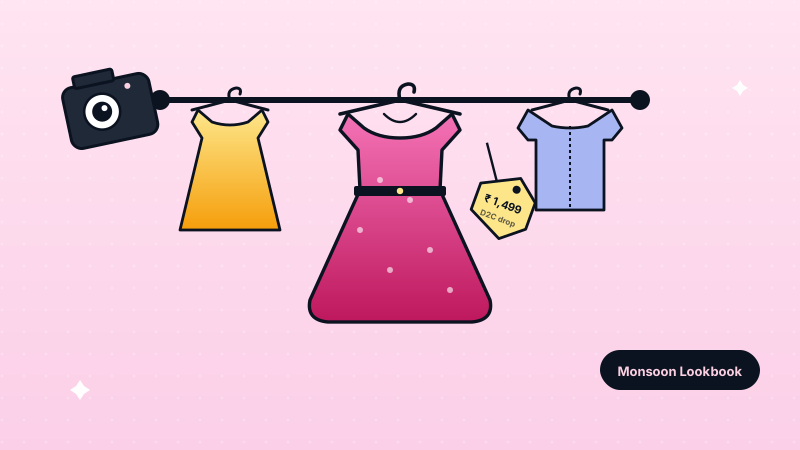
Seasonal collections are shared as curated image carousels. A brand launching its monsoon collection sends a series of styled images with product names, prices, and available sizes. Each image includes a "Shop Now" button that opens the product detail or triggers an order flow within WhatsApp.
Occasion-based styling is where WhatsApp lookbooks truly differentiate. Before Diwali, a brand sends a "Festive Edit" lookbook with outfit combinations — kurta sets, fusion wear, accessories pairings. Before wedding season, they share "Sangeet Looks" and "Mehendi Outfits" curated by their styling team.
Personalized recommendations take lookbooks further. Based on previous purchases and browsing history, brands send individually curated looks. A customer who previously bought a navy blazer receives a WhatsApp message showing three ways to style it with new arrivals. This level of personalization is impossible through email or social media.
Video lookbooks add movement and context. Short 15-30 second videos showing how a fabric drapes, how a jacket fits during movement, or how an outfit transitions from day to evening — these drive significantly higher engagement than static images.
How Should Brands Handle Size Guides and Fit Consultations on WhatsApp?
Size-related returns are the biggest pain point in online fashion. Industry data suggests that 30-40% of fashion returns in India are due to size issues (Source: Redseer Fashion E-commerce Report, 2024). WhatsApp dramatically reduces this by enabling real-time fit consultations.
Interactive size guides are sent as structured messages. Instead of a generic size chart, the chatbot asks the customer for their height, weight, and usual size in popular brands. It then recommends the best size for the specific garment, accounting for the brand's own fit characteristics (slim fit, relaxed fit, oversized).
Photo-based recommendations allow customers to share photos of garments they currently own and love. The styling team or AI system analyses the fit and recommends the equivalent size in the new collection.
Measurement assistance guides customers through taking their own measurements using a WhatsApp video or step-by-step image guide. These measurements are saved in the customer profile for future purchases, making repeat buying effortless.
Fit feedback loops improve accuracy over time. After each purchase, the brand asks "How was the fit?" on WhatsApp. This data refines the recommendation algorithm, leading to progressively better suggestions.
In WatEase merchant data (internal benchmark, methodology on request, as of June 2026), brands using WatEase's catalog and automation features typically see a meaningful reduction in size-related returns after implementing WhatsApp fit consultations.
Run your business on WhatsApp with WatEase
Set up in minutes with guided onboarding. 0% markup on WhatsApp messages.
Get started →Want a plan sized to you? Get a quote
What Makes WhatsApp Flash Sales So Effective for Fashion?
Flash sales are a staple of D2C fashion strategy, and WhatsApp has proven to be the most effective channel for running them in India. The combination of high open rates, urgency, and one-tap purchasing creates a powerful conversion engine.
Pre-sale buzz building starts 48-72 hours before the sale. Brands send teaser messages with blurred product images, countdown timers, and "Early Access" registration for loyal customers. This builds anticipation and ensures maximum attention when the sale goes live.
Sale launch notifications hit WhatsApp inboxes at the exact start time. Unlike email which might be opened hours later, WhatsApp messages tend to be read much sooner — often within minutes. For a flash sale with limited inventory, this immediacy is crucial.
Real-time stock updates create urgency without being pushy. Messages like "Only 12 pieces left in your size" or "This style sold out in Medium — Small and Large still available" drive quick decision-making.
One-tap checkout through WhatsApp payment links eliminates the multi-step website checkout process. Customers select their size, confirm the address (saved from previous orders), and pay via UPI — all within WhatsApp. The entire purchase can take just a few taps.
Post-sale engagement converts sale buyers into full-price customers. A thank-you message with styling tips for their purchased items, followed by a "Complete the Look" recommendation at regular prices, extends the customer relationship beyond the discount trigger.
How Do Fashion Brands Manage Returns and Exchanges on WhatsApp?
Returns are inevitable in fashion, but the experience does not have to be painful. WhatsApp turns the returns process from a frustration into a brand-building moment.
Initiating a return is as simple as sending a message. The customer selects the order, chooses the item, and indicates whether they want an exchange or refund. No logging into websites, no searching for order numbers, no waiting in call queues.
Photo verification speeds up the process. The customer shares a quick photo of the item, confirming its condition. For exchange requests, they specify the new size or colour they want, and the system immediately checks availability.
Pickup scheduling happens within the same conversation. The customer selects a convenient pickup date and time slot. They receive pickup confirmation and courier tracking — all through WhatsApp notifications.
Instant exchange dispatch is what sets great brands apart. While the return pickup is in transit, the exchange item is already shipped. The customer receives tracking for both the return pickup and the new delivery, keeping them informed at every step.
How Are Fashion Brands Leveraging Influencer Collaborations Through WhatsApp?
Influencer marketing and WhatsApp commerce create a powerful combination for Indian fashion brands. The strategy connects the discovery that happens on Instagram and YouTube with the conversion that happens on WhatsApp.
Exclusive influencer collections are launched first on WhatsApp. When a brand collaborates with an influencer on a capsule collection, the influencer shares a unique WhatsApp link with their followers. Fans who join get first access to the collection, creating exclusivity and driving rapid sales.
Influencer discount codes are distributed through WhatsApp broadcast lists. Unlike public Instagram stories, WhatsApp messages feel personal and exclusive. A message saying "Here is your private 20% code from [Influencer Name]" converts significantly better than a generic story swipe-up.
Try-on content sharing uses WhatsApp status and direct messages. Influencers share try-on videos and outfit reviews through WhatsApp, and their followers can directly reply with purchase intent. The brand's automated system takes over from there, handling sizing, payment, and delivery.
What Should Fashion Brands Do to Get Started?
The path to WhatsApp commerce for fashion brands starts with three essential steps.
First, build your WhatsApp catalog with professional product photography, accurate size information, and compelling descriptions. This is your digital storefront.
Second, set up automated flows for the most common customer queries — size recommendations, delivery timelines, return policies, and COD availability. This handles a large share of conversations without human intervention.
Third, integrate WhatsApp with your order management and logistics systems. Every order placed on WhatsApp should flow seamlessly into your fulfillment pipeline.
Channel economics for a typical Indian D2C fashion brand tend to stack up as follows. The ranges below reflect WatEase merchant data (internal benchmark, methodology on request, as of June 2026) and are directional — your own results will vary by catalog, audience, and creative:
| Channel | Open / view rate | Conversion rate | Avg cost per order |
|---|---|---|---|
| Email broadcast | lower | lower | lower–mid |
| Instagram DM (manual) | mid–high (within 24h) | mid | mid–high (staff time) |
| Website (organic + paid) | n/a | low–mid | highest |
| WhatsApp Business API | highest (typically read within minutes) | highest | low–mid |
The combination of inbox-level reach and personal-feeling conversation is why WhatsApp tends to outperform other direct-response channels for fashion in India. For the underlying API capabilities, see the official WhatsApp Business Platform documentation. If you also run a brand website, pair this guide with our SEO playbook for Indian D2C brands — the two channels reinforce each other.
Tell us your use case and we quote a plan that fits your brand's scale, or get started to start selling fashion on WhatsApp today.